
Another year at the lab has flown by! As our students, volunteers, and staff sign off for the holidays, we’d like to take a look back at everything that we’ve accomplished in 2025.
Regular readers of our blog may notice that I am a relatively new name for the lab… That’s because I started in March! As a former graduate assistant and volunteer, I have fallen right back into place on the team and taken to my new duties, as the conservator primarily focused on metals, like a diver to water. Don’t think for an instant that we’ve forgotten about our previous conservator - Terry. She’s back in the lab as a regular volunteer working on concretions!
Just as we gained a staff member at the beginning of the year, we’re losing a staff member as the year ends. Our Lab Manager, Daniel Lowery, is moving to Kure Beach to become the new Office Manager for OSA’s Underwater Archaeology Branch office. Daniel worked at the lab as a graduate assistant before coming on as the Lab Office Manager in 2022, becoming an invaluable part of the team and helping us expand our education and outreach abilities over the past couple of years. While we’re devastated to see him leave the lab, we’re excited for him to start this new chapter in his career and to be able to keep working closely with him and the other UAB staff!
This year, outreach has been the name of the game. We saw record numbers at each of our Saturday events in April and November, with a grand total of 630 visitors coming through the lab on these days combined. In addition, we were able to lead 94 groups through our facility on weekday tours and attended 43 outreach events across the state of North Carolina, from Blowing Rock to Wilmington!
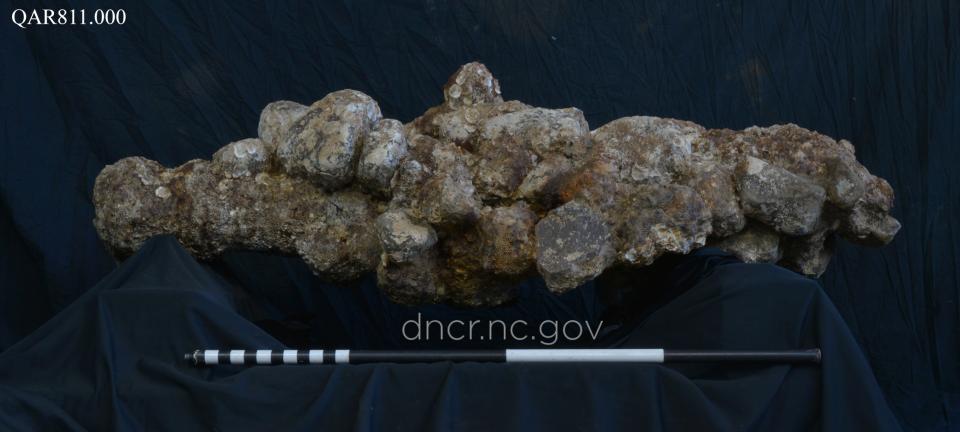
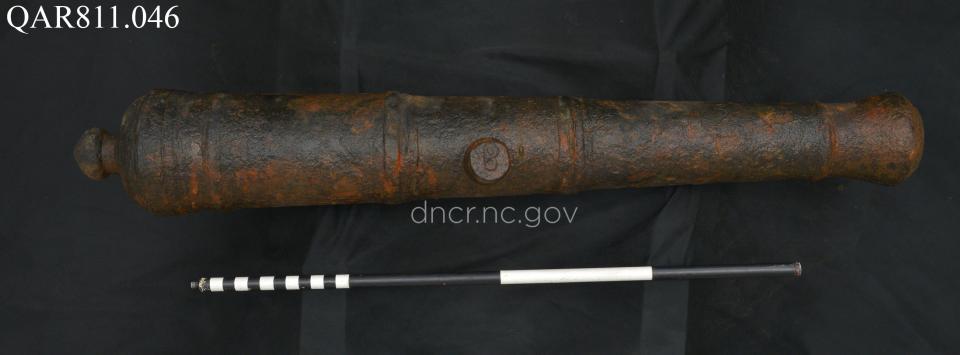
Several of our longer-term projects have continued to progress this year. The 2-pounder cannon C29 has received the finishing touches it needs to be sent to the North Carolina Maritime Museum in Beaufort next year. Even more exciting, however, is the progress made on the cannon C5! We finished removing the last bits of concretion from the cannon in October and moved it out to its new tank in our warehouse. This is where it will undergo electrolytic reduction, our iron desalination process. Looking back at the nearly 3 years it took to clean C5, it is truly impressive to see how much was concreted to the cannon.
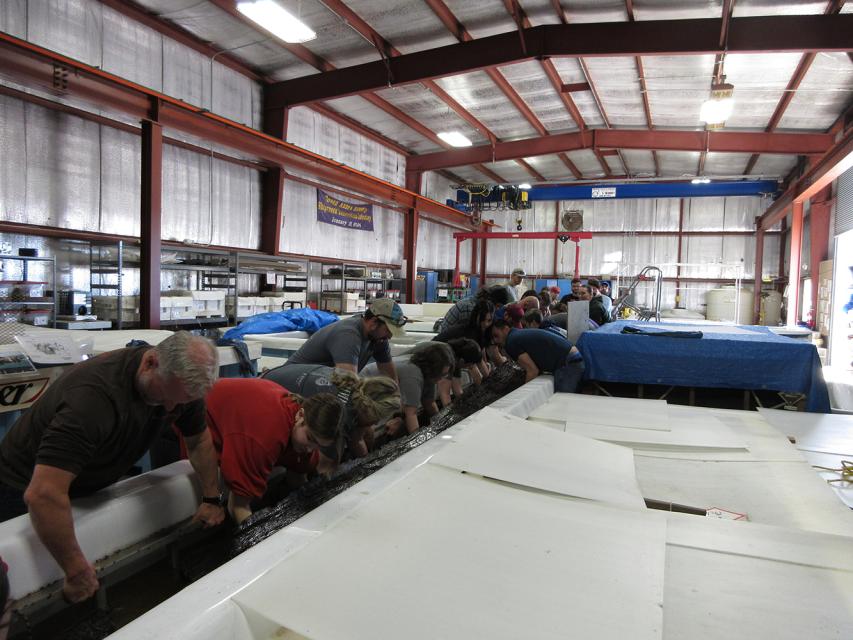
Outside of conserving artifacts from Queen Anne’s Revenge/La Concorde, we have taken on and continued work on several other projects this year. The 27-foot Lake Waccamaw canoe continues to progress in treatment, finishing desalination and starting our wood consolidation process.
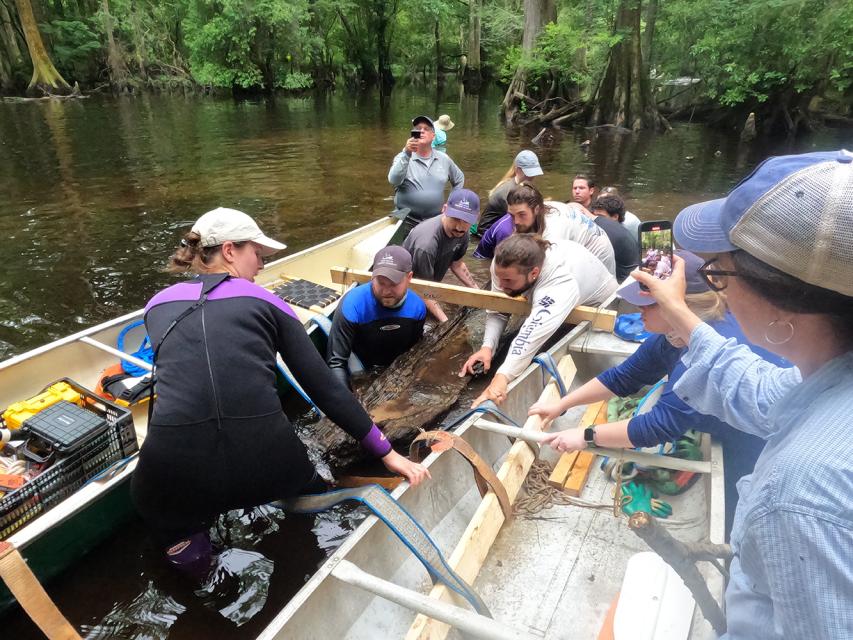
This summer, we also began treatment of a new canoe recovered from the South River near Autryville, NC. We were honored to work with the OSA’s Underwater Archaeology Branch, Secretary Pam Cashwell, the NC American Indian Heritage Commission and members of the Coharie Tribe of Sampson County on the day we recovered the canoe! The South River canoe has been in active desalination for several months now and could be ready to join the Lake Waccamaw canoe in the consolidation process as early as next year.
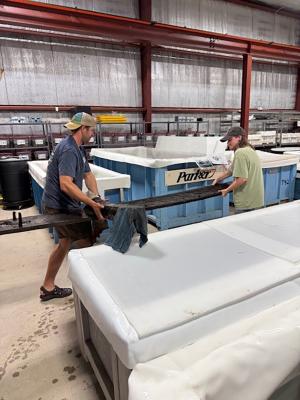
Some may also be aware of an 18th-century shipwreck recovered by East Carolina University’s Program in Maritime Studies during a field school this past summer at Brunswick Town near Wilmington, NC. Our lab has taken on the storage and treatment of the ship timbers and other artifacts recovered during the 2025 field season.
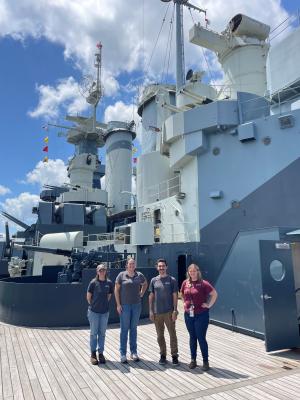
In addition to our trips into the field to the South River and Brunswick Town for artifact recovery, the lab team had the opportunity to travel down to USS North Carolina in Wilmington, NC over the summer and were able to see some of the amazing work going on behind the scenes. It was definitely a highlight of our year!
While the North Carolina Maritime Museum remains closed for a little while longer, their much-needed renovations allowed us to recall artifacts normally on display back to the lab for condition check-ups and additional research. We were particularly excited to use our recently learned RTI skills to photograph 30+ artifacts that may provide us with more information on their uses and manufacture.
As always, we’d like to end by extending our deepest thanks to the interns, students, and volunteers that worked with us over the course of the past year. Thanks to some large projects that called for “all hands on deck,” we rounded out the year with the help of a grand total of 78 student workers and volunteers! Without you all, we wouldn’t be able to do what we do. Here’s to an even bigger and better 2026!
Images:
- NC Office of State Archaeology staff and members of the Coharie Tribe moving the South River canoe into a cradle for transport. Image by NC Department of Natural and Cultural Resources.
- Cannon C5 before cleaning. Image by NC Department of Natural and Cultural Resources.
- Cannon C5 after cleaning. Image by NC Department of Natural and Cultural Resources.
- QAR Lab staff and students and staff from ECU’s Maritime Studies program removing the metal support structure from under the Lake Waccamaw canoe. Image by NC Department of Natural and Cultural Resources.
- ECU staff archaeologist Jeremy Borelli and Darby moving timbers from the Brunswick Town shipwreck. Image by NC Department of Natural and Cultural Resources.
- QAR Lab team on deck at USS North Carolina in Wilmington, NC. Image by NC Department of Natural and Cultural Resources.